HUMAN PAPILLOMAVIRUS (HPV)
What is HPV?
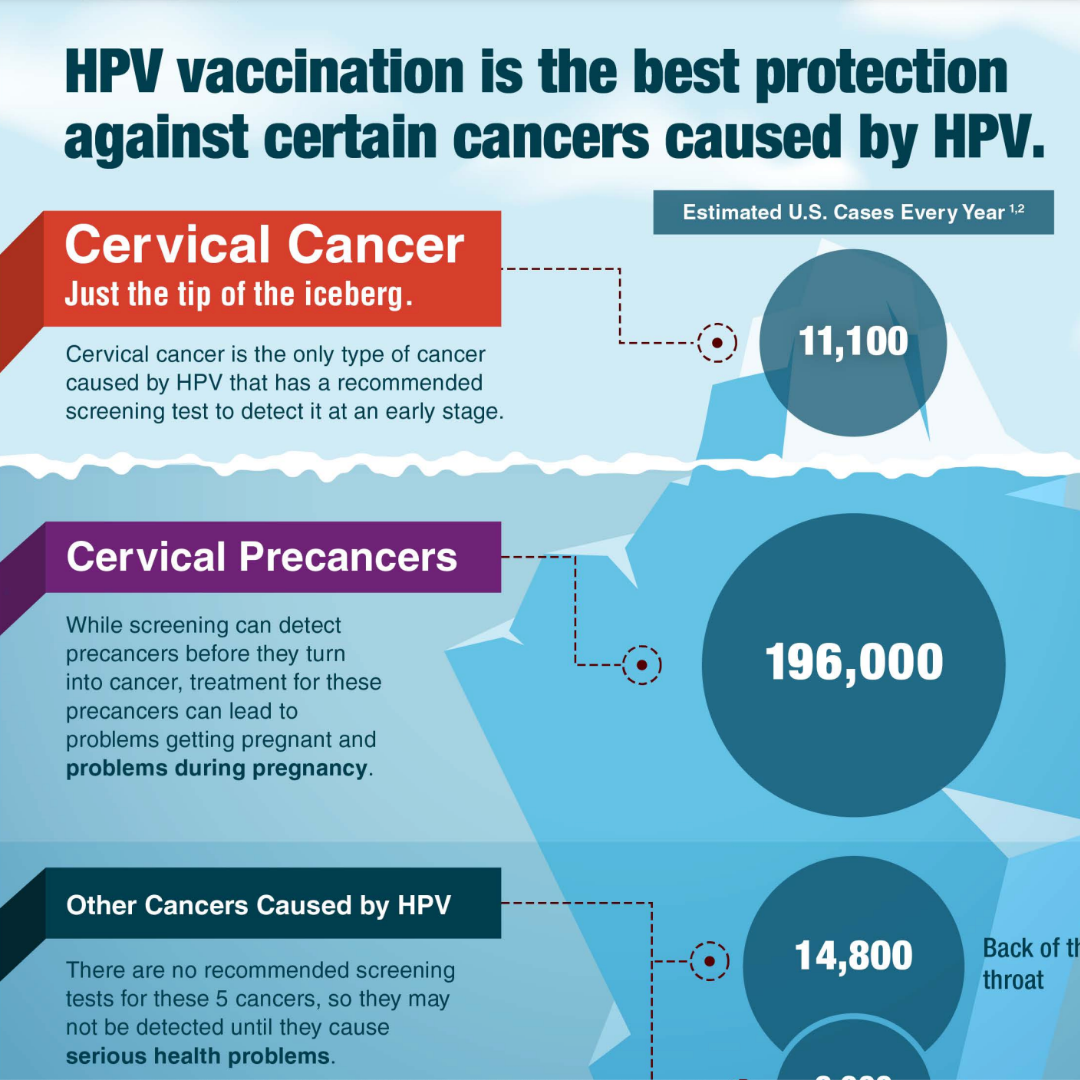
HPV (human papillomavirus) is the most common sexually transmitted infection. It spreads through vaginal, anal, or oral sex, as well as close skin-to-skin contact with someone who has the virus. There are many types of HPV—some cause genital warts, while others can lead to certain cancers. Most HPV infections go away on their own, and there is a safe and effective HPV vaccine that can prevent most cancers caused by the virus.
HPV Symptoms
Most people with HPV don’t have any symptoms and don’t know they are infected. Even without symptoms, HPV can still spread to others.
When symptoms do appear, they may include:
Genital warts (small bumps or clusters in the genital or anal area)
Warts in the throat (rare, but can happen with oral HPV)
Cell changes that could later develop into cancer (often found during routine Pap tests)
How Can I Get Tested for HPV?
There is no general HPV test for everyone, but there are HPV tests used for people with a cervix, usually done at the same time as a Pap test. Regular screenings are important because HPV often has no symptoms.