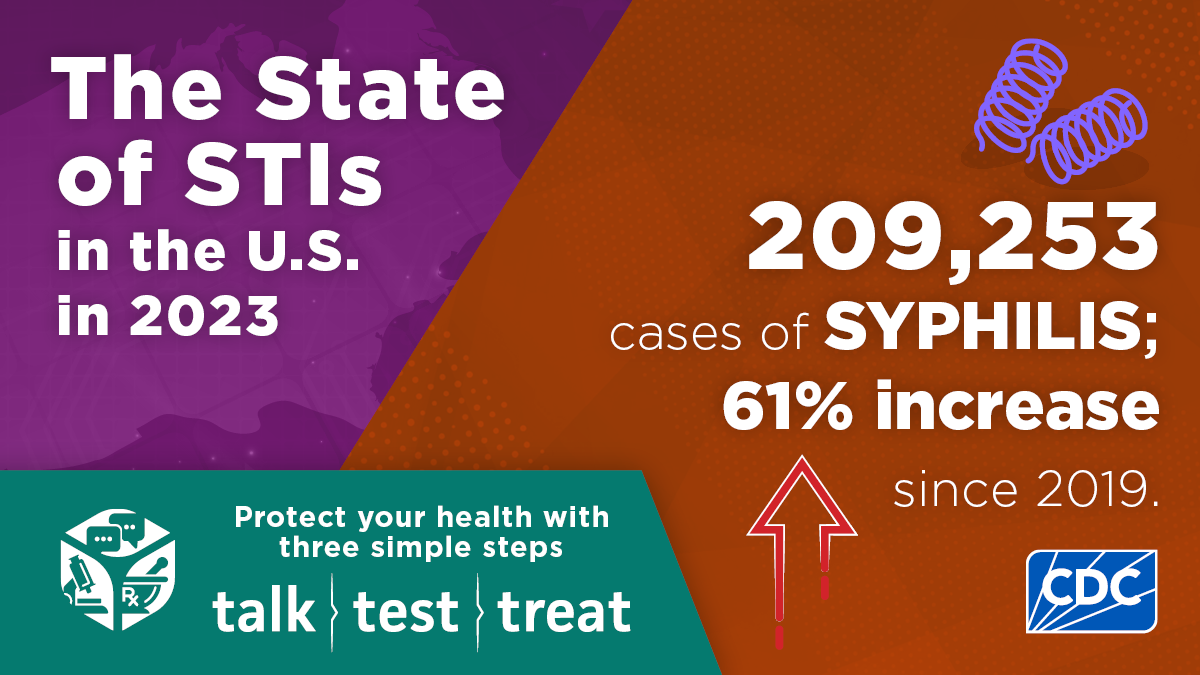
SYPHILIS
What is Syphilis?
Syphilis is a bacterial infection spread during vaginal, anal, or oral sex with someone who has syphilis. It can also be passed from a pregnant person to their baby during pregnancy or birth. Syphilis has a cure and is treated with antibiotics. If left untreated, it can cause serious long-term health problems.
Visit the American Sexual Health Association to learn more about syphilis and pregnancy.
Syphilis Symptoms
Syphilis symptoms can come and go, and sometimes there are no symptoms at all. People without symptoms can still spread the infection. When symptoms do appear, they usually happen in stages:
Primary stage (10–90 days after exposure): A single sore (called a chancre) may appear on the genitals, anus, lips, or mouth. It’s usually painless and goes away on its own.
Secondary stage: Rash (often on palms or soles), fever, sore throat, swollen lymph nodes, muscle aches, or hair loss. Symptoms may come and go.
Latent stage: No symptoms, but the infection is still in the body.
Tertiary stage (rare, years later if untreated): Can cause severe problems with the brain, nerves, heart, and other organs.
How Can I Get Tested for Syphilis?
If you are experiencing symptoms or would like reassurance about your status, please visit our testing services page.
Visit the CDC Syphilis webpage for more information about syphilis.